
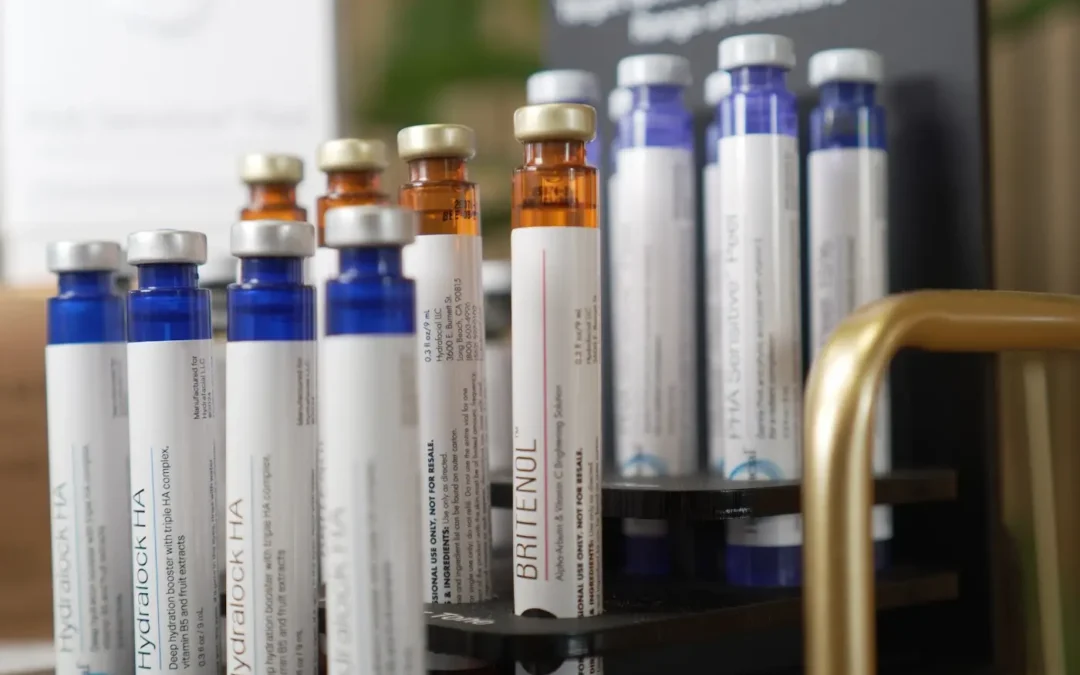
Dull skin is one of the most common reasons people come to see us. Two of the treatments we use most for it are Hydrafacial and chemical peels. Both brighten, but they work very differently.
How Hydrafacial works
Hydrafacial cleanses, exfoliates, extracts and then hydrates the skin in one appointment. There is no downtime, which is why it is so popular before events. It is excellent for congestion, dehydration and that flat, tired look — and because the results are immediate, it is a good introduction to treatments if you have never had one.
How a chemical peel works
A professional peel uses carefully chosen acids to remove the outer layers of skin in a controlled way. This encourages fresher, more even skin to come through. Peels are particularly useful for pigmentation, acne-prone skin and rough texture. Depending on the peel, you may have no visible peeling at all or a few days of light flaking.
Which one should you choose?
- Choose Hydrafacial if your skin is congested, dehydrated or dull and you need to look your best within days.
- Choose a peel if your main concern is pigmentation, breakouts or texture, and you can allow a little time for the skin to settle.
- Consider both as part of a plan. Many skins benefit from a course of peels with Hydrafacial in between for maintenance.
A note on deeper skin tones
Both treatments can be suitable for deeper skin tones, but peel choice matters. The wrong peel can trigger post-inflammatory pigmentation, which is why we always assess first and choose the strength carefully.
Not sure where to start? Book a Skin Health Assessment and we will look properly at your skin, explain what is happening and write you a plan — whether or not you ever book a treatment.